DRAIN CLEANING · GUIDE
Drain Cleaning vs Hydro Jetting: When Each Wins
Drain cleaning describes a family of methods for removing blockages and buildup from plumbing drain lines and sewer laterals. The two most common professional methods are mechanical snaking (rotating cable) and hydro jetting (high-pressure water). Snaking is the cheaper, more targeted option for a single clog. Hydro jetting is the more thorough, more expensive option that cleans the entire interior pipe surface rather than just punching through one obstruction. Choosing between them is a diagnostic question. Answered by a camera inspection of the pipe. Not a contractor preference.
Snaking (cable / rodding)
A drain snake is a long, flexible steel cable with a cutting head at the end. The operator feeds the cable into the drain line and powers it (manually for small snakes, motorized for larger ones), rotating the head to bore through the clog. Once the obstruction is broken up, water flow is restored.
Snaking is fast, inexpensive, and effective for what it does. Clearing a localized obstruction. It does not clean the pipe walls. Grease, soap scum, mineral deposits, and root remnants stay in place. The next clog often forms in the same spot because the conditions that caused it are untouched.
Hydro jetting
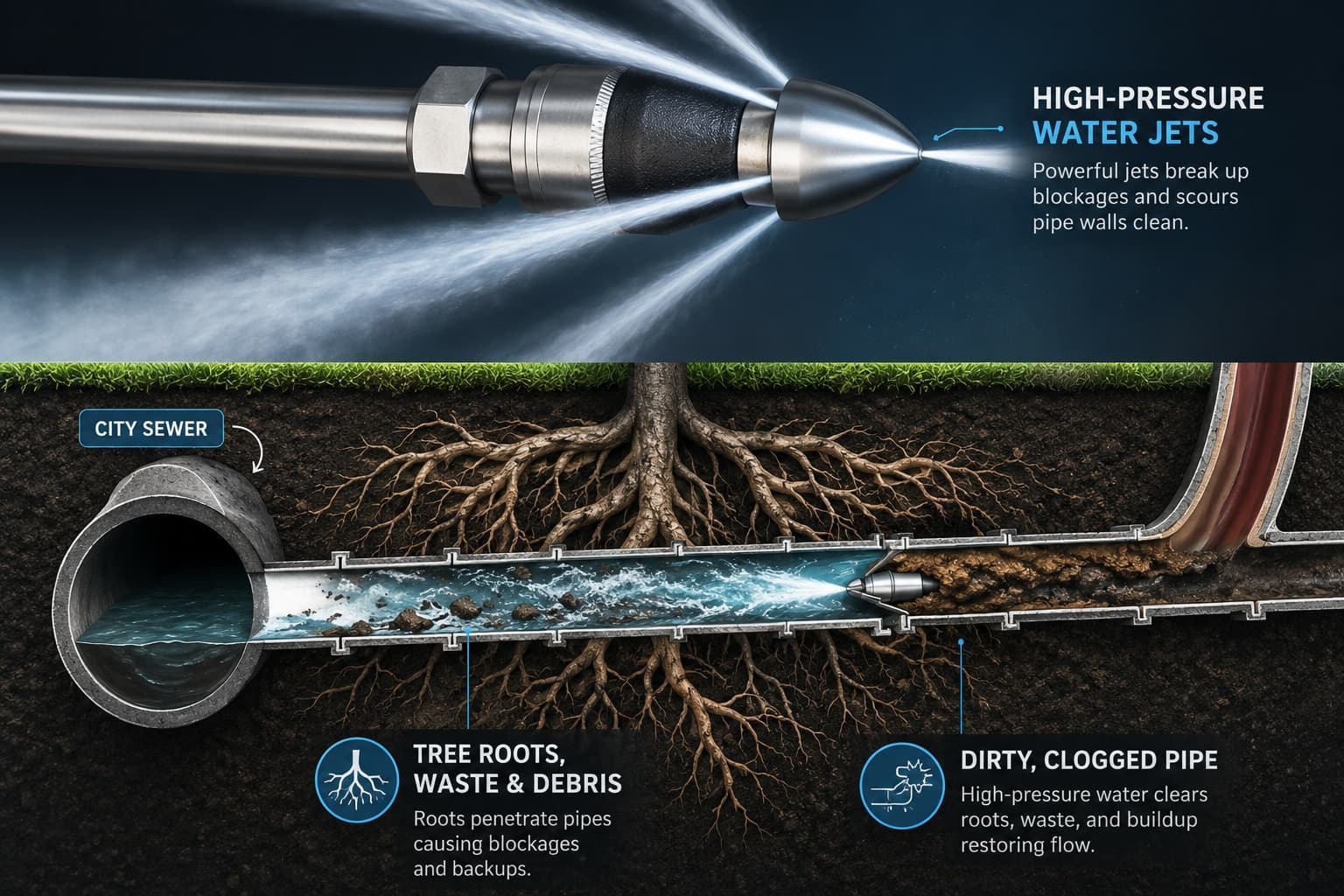
A hydro jet is a high-pressure water system: a pump delivering 1,500 to 4,000 PSI through a specialized nozzle on the end of a hose. The nozzle has rear-facing jets that propel it forward through the pipe and either side or forward jets that scour the pipe walls. The water blasts grease, scale, soap scum, and root tendrils off the pipe interior, leaving a clean wall behind.
The result is a fully cleaned line. Not just an opening through an obstruction. Future flow is unobstructed for a much longer period than after snaking the same line.
| Snaking | Hydro jetting | |
|---|---|---|
| Mechanism | Mechanical cable + cutting head | High-pressure water spray |
| Removes clog? | Yes | Yes |
| Cleans pipe walls? | No | Yes |
| Effective on grease? | Punches through, leaves it behind | Removes it completely |
| Effective on roots? | Cuts and partial removal | Full removal back to pipe wall |
| Effective on scale/mineral? | No | Yes |
| Risk to compromised pipe | Lower | Higher (camera inspection first) |
| Typical cost | Lower | Higher |
| Recommended cadence | As needed | Periodic on high-use lines |
When hydro jetting is the right call
Jetting earns its higher cost in specific situations:
- Recurring clogs at the same location. If snaking has fixed the problem twice and it came back twice, jetting addresses the buildup snaking left behind.
- Grease accumulation in commercial lines. Restaurant, hotel, and multi-family lines accumulate grease that snaking cannot remove. Jetting clears it.
- Root intrusion. Roots that snaking can only partially cut get fully scoured out by jetting. Combine with a planned long-term fix for the entry path.
- Pre-CIPP preparation. Before installing a CIPP liner, the pipe interior must be clean. Jetting is the standard prep method.
- Scale and mineral deposits. Hard-water buildup that has narrowed pipe over years can be stripped back to bare pipe by jetting.
Why camera inspection comes first
A camera run takes minutes and provides three things:
- Diagnosis of the actual problem. Grease layer? Roots? Foreign object? Collapse? Each calls for a different response.
- Confirmation the pipe can take the chosen method. Pipe in fragile structural condition needs careful technique selection.
- Documentation. The footage is your record of what was wrong and what was done.
A contractor who skips the camera and goes straight to a method is gambling with your pipe. Reputable shops always run the camera first.
QUESTIONS HOMEOWNERS ASK
Drain cleaning FAQ
Next steps
If you have a single fresh clog with no history, snaking is probably enough. If you have recurring clogs, grease accumulation, root intrusion, or commercial-volume drains, schedule a camera inspection and discuss whether jetting (or further structural repair) is the right next step.
RELATED GUIDES
- Sewer Line Repair: Trenchless vs Excavation Compared
When trenchless methods (CIPP, pipe bursting, slip lining) save money and landscape, when full excavation is the right call, and the camera inspection that determines which method actually applies to your situation.
- Grease Trap Compliance for SWFL Restaurants
The 25% rule, county code requirements, manifest documentation health inspectors look for, sizing your trap to actual volume, and the FOG-management practices that keep your system out of trouble.